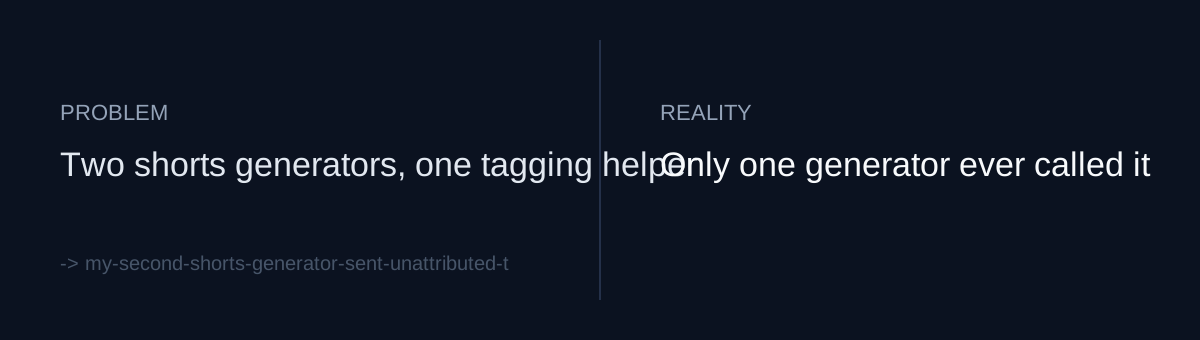
The helper existed, but one call site was missing
My shorts pipeline has two generators. One makes shorts about personality themes. The other makes match-style shorts that pair two subjects and compare them. Both put an app landing link in the video description.
Links from the personality generator went through a shared helper, _tagged_url. It adds UTM parameters to the link, so the analytics tool can tell that a visit came from shorts. The match generator never called that helper. It pasted the bare link.
So visits from match shorts arrived with no source recorded. That doesn't mean they brought zero traffic. It means that any traffic they did bring couldn't be credited to the generator that produced it.
When your pipeline has more than one code path doing the same job, have you ever counted how many of those paths actually carry the measurement code?
Why I didn't see it
I remembered tagging as already done, and that was the problem. The helper existed, and personality-shorts links really were tagged. In my head that became "shorts links are tagged." The accurate version was "links from one of the two shorts generators are tagged."
A gap like this never raises an error. Untagged links open fine, the videos upload fine, and the visits still show up in analytics. They just get lumped in with traffic from everywhere else. Nothing ever looked like a failure.
What I changed
What would you do here: refactor both generators to share one link-building path, or just make the missing one call the existing helper?
I did the second. The match generator now wraps its landing links in _tagged_url with campaign=app and content=match_<lang>. That's the same scheme the personality shorts use, with the content value telling apart the match generator and the language. The change was one file, two lines added and one removed.
With that, both shorts generators tag their links. The fix was small. Most of the time went into noticing the gap in the first place.
Self-check
- If you have a measurement helper, have you listed every path that should call it and compared that list against where it's actually called?
- When several generators produce the same kind of output (videos, posts, emails), have you opened one real link from each and checked its parameters yourself?
- Can you tell from the tag values alone which generator and which language version a visit came from?
The honest part
I still don't know how much traffic match shorts actually bring. The commit only guarantees that the source will be visible from here on. Whether the number turns out to be meaningful will take accumulated data. Traffic this generator sent before the fix still can't be separated out. I could check by eye this time because there are only two generators, but nothing is in place yet to catch the same omission if I add a third.