Paper-only experiments. Figures are generalized; the diagram is conceptual; any real chart would come from the backtest report, never fabricated.
The strategies that taught me the most are the ones I killed on schedule.
The setup
Two regime-switching strategies — the kind that's supposed to shine by defending in downturns and participating in rallies. Both cleared the initial "is this a coherent idea" bar. Both had a pre-registered out-of-sample Sharpe gate: they had to clear a Sharpe threshold on data they weren't fit on, or they die.
Both failed the gate.
Why they failed — and why that's fine
The honest reading isn't "the idea is worthless." It's that the recent regime didn't contain the slow, large drawdown these strategies are built to defend against — so the defensive premium never got a chance to show up. In a different market, they might. But I don't get to keep a strategy because it would work in a market that didn't happen.
That's the trap the gate exists to close: a switching strategy can always be tuned until it looks good on the window you have, and post-hoc selection ("see, it protected here") is how you convince yourself of an edge that's really just curve-fit to the past.
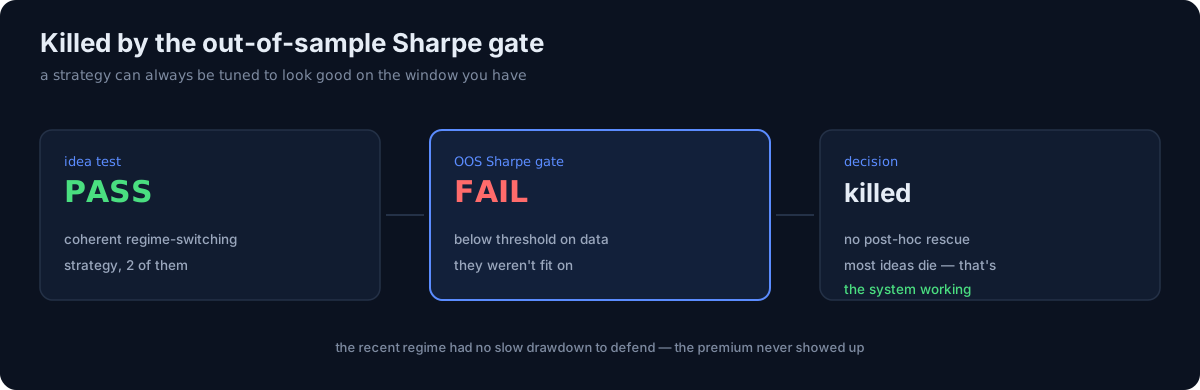 Passed the idea test, failed the out-of-sample gate.
The honest part
Killing a strategy you built stings, which is exactly why the decision has to be pre-registered — so it's the gate saying no, not you talking yourself into "one more tweak." Refusing post-hoc selection means most of my ideas die, and that's the system working. A method that never tells you no is a method that will happily fund your worst instincts. The two dead strategies cost me nothing real (paper) and bought me a clean rule I trust more than any single backtest.