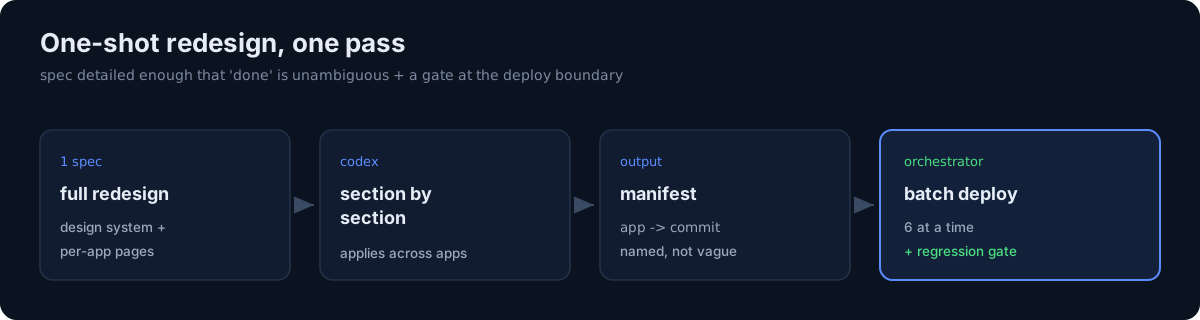
The biggest single agent run I've done: redesign a whole portfolio of apps from one spec, in one pass.
The shape
I wrote a single spec covering the full redesign — the design system, shared components, and per-app pages — organized into sections. I handed it to Codex, which worked through the sections one at a time, applying the changes across the apps. Then an orchestrator (Claude) batch-deployed the results.
The scale that made it work: ~30+ apps redesigned and deployed, six at a time in the background, because a serial deploy loop times out.
The gate that made it safe
The one non-negotiable was a regression-verification gate before deploy. On the last app in the batch, I had the orchestrator re-verify the output against the requirements rather than trusting the whole batch on faith. One explicit check, at the riskiest point (right before shipping), catches the class of error where the agent drifted somewhere in the middle.
The handoff artifact
The redesign produced an "app name → commit hash" manifest. That's what let a second agent deploy confidently: it wasn't deploying "whatever Codex probably did," it was deploying named commits. The manifest is the contract; without it, batch work drifts and nobody can tell which app is in which state.
The honest part
A one-shot redesign feels reckless — dozens of apps changed by an agent at once — and it would be, without two things: a spec detailed enough that "done" is unambiguous, and a verification gate at the deploy boundary. The agent's speed is only an asset if the surrounding structure makes a wrong result visible before it ships. Spend your attention on the spec and the gate; let the agent have the volume.